


In the UK, we are blessed with a diverse architectural heritage, from flint-walled cottages to red-brick Victorian terraces. However, these historic homes weren’t always designed for 21st-century living. When adding a modern extension, the greatest challenge is not the build itself, but the “join”—the point where the heritage of the past meets the innovation of the present.
A successful project should feel like a natural evolution of the property. Here is how to create a seamless transition between your old and new builds.
1. The Architectural Connection: “The Glazed Link”
One of the most effective ways to connect two different eras is to not let them touch at all—at least, not with solid masonry.
-
The Glass Corridor: Using a frameless glass link or a “light well” between the original house and the new extension creates a clear visual break. This allows the original exterior wall to remain visible, celebrating the history of the building rather than hiding it.
-
Why it works: It acts as a “buffer zone.” By using transparent materials, you prevent the new build from “clashing” with the old, making the transition feel deliberate and light-filled.
2. Material Harmony: Complement or Contrast?
When deciding how to create seamless transitions between old and new builds, you generally have two professional paths:
Path A: The Complementary Approach
This involves sourcing materials that mimic the original.
-
Reclaimed Bricks: If your house is Victorian, don’t use modern metric bricks. Source “reclaimed stocks” that match the colour, size, and weathering of the existing walls.
-
Mortar Matching: Use lime mortar if the original building uses it. Modern cement is too rigid for old bricks and will look jarringly different once dry.
Path B: The Deliberate Contrast
Sometimes, trying to match the old results in a “pastiche” that looks like a poor imitation.
-
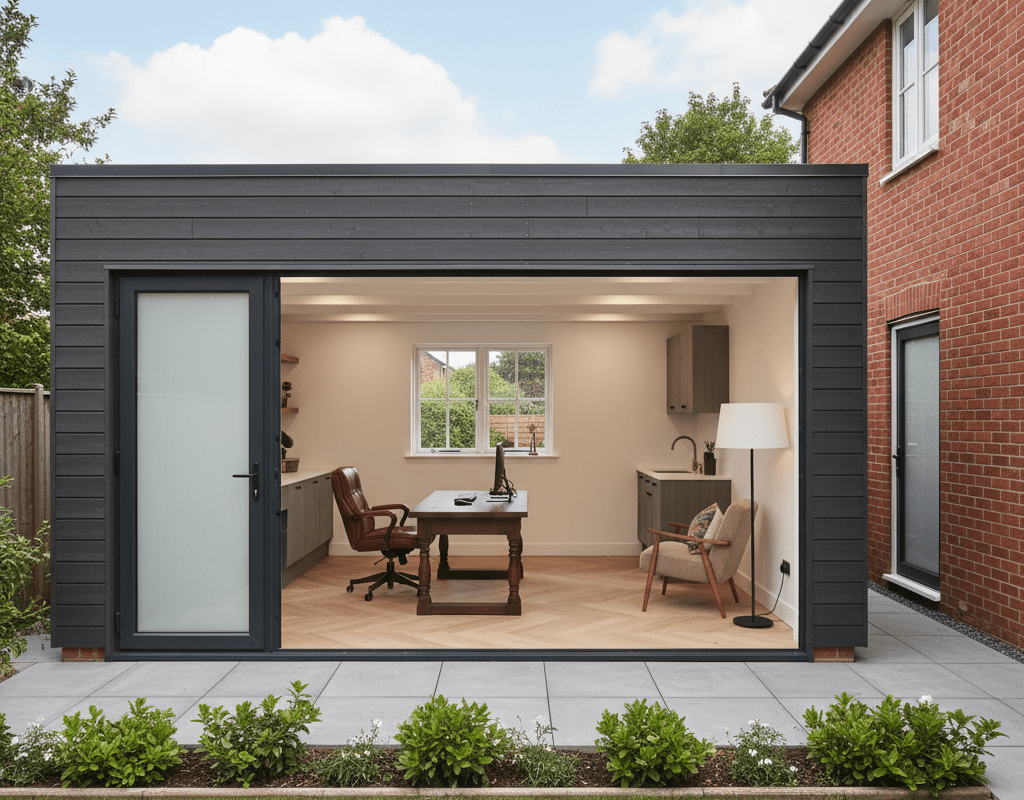
Contemporary Materials: Using zinc cladding, charred timber (Shou Sugi Ban), or large-format glazing creates a bold, modern counterpoint. This highlights the beauty of the original stone or brickwork through juxtaposition.
3. Consistency Underfoot: The Flooring Rule
Nothing disrupts the “flow” of a home more than a change in flooring at a threshold. To create a truly seamless transition, you must unify the floor levels.
-
Continuous Flooring: Use the same flooring (e.g., engineered oak or large-format limestone) from the original hallway straight through into the new extension.
-
Flush Thresholds: Ensure the floor levels are identical. If the new extension has a concrete slab and the old house has suspended timber joists, your builder must carefully calculate the heights to avoid any “trip hazards” or awkward steps.
4. Aligning Sightlines and Ceiling Heights
Transitions often feel “clunky” because the proportions don’t line up.
-
The “Golden Line”: Try to align the top of your new windows or doors with the lintels of the original house. This creates a continuous horizontal “datum line” that the eye follows naturally.
-
Ceiling Heights: Older homes often have very high ceilings. If your new extension has a lower ceiling, the transition can feel “crushed.” A professional trick is to use a “shadow gap” or a coffered ceiling at the join to mask the change in height elegantly.
5. Interior “Echoes”
To make the new space feel like part of the same story, carry “DNA” from the old house into the extension.
-
Skirting and Architraves: Even in a minimalist modern extension, using the same height of skirting board (even if the profile is simpler) creates a subtle sense of continuity.
-
Colour Drenching: Use a consistent colour palette. If your “old” living room is a deep navy, consider using the same navy for the kitchen island or the window frames in the “new” extension.
Technical Checklist for Transitions
| Feature | Professional Tip |
| Structural Steels | Hide RSJs within the ceiling void for a “flush” look between rooms. |
| Damp Proofing | Ensure a vertical DPC is installed where the new wall meets the old to prevent moisture travel. |
| Movement Joints | New builds “settle” faster than old ones; ensure your architect includes a flexible joint at the connection point. |
6. Lighting the Transition
Older parts of British homes are notoriously dark, while modern extensions are often flooded with light. To prevent the old house from feeling like a “cave,” use the transition to pull light backwards.
-
Roof Lanterns: Placing a roof light directly over the join between the two buildings ensures the deepest part of the floor plan remains bright.
-
Consistent Temperature: Ensure the LED bulbs in both the old and new sections have the same “Colour Temperature” (e.g., 2700K Warm White). Mixing “cool blue” lights in the extension with “warm yellow” in the lounge will make the transition feel disjointed.
Final Thoughts
Creating a seamless transition is about respect. By acknowledging the craftsmanship of the past while embracing the functionality of the present, you can create a home that feels unified, spacious, and timeless.
