

The way we use our homes has changed fundamentally over the last decade. A house is no longer just a place to sleep; it is a multi-functional hub that serves as an office, a gym, a cinema, and a sanctuary. In the UK, where much of our housing stock is Victorian or pre-war, “modernising” goes far beyond a fresh coat of paint.
Upgrading your home for modern living standards is about integrating technology, improving sustainability, and adapting the layout to suit a contemporary lifestyle. Here is how to bring your property into the 21st century.
1. Prioritise Energy Efficiency (The “Green” Standard)
With rising energy costs and a national focus on Net Zero, a modern home must be thermally efficient. An upgraded home should aim for a high Energy Performance Certificate (EPC) rating.
-
Insulation Upgrades: Move beyond basic loft insulation. Consider high-performance “solid wall” insulation or underfloor insulation to eliminate draughts.
-
Modern Glazing: If your double glazing is over 20 years old, it is likely underperforming. Upgrading to A++ rated windows or slim-profile triple glazing can significantly reduce heat loss.
-
Heat Pumps vs. Boilers: As the UK moves away from gas, consider air-source heat pumps. If a full system change isn’t viable yet, ensure your current system is “hydrogen-ready” and fitted with a smart thermostat like Tado or Nest.
2. Smart Home Integration
A modern home should work for you, not the other way around. “Smart” upgrades should be seamless and improve your daily routine.
-
Infrastructure First: Don’t rely solely on Wi-Fi. During a renovation, run Cat6 cabling to key rooms. This ensures “dead zones” are a thing of the past and provides the bandwidth needed for 4K streaming and video conferencing.
-
Integrated Security: Modern standards include app-controlled doorbells, smart locks, and CCTV systems that you can monitor from your phone anywhere in the world.
-
Lighting Scenes: Replace traditional switches with smart lighting systems (like Philips Hue or Lutron). These allow you to set “scenes”—lowering the lights for a movie or brightening them for “work mode” at the touch of a button.
3. Creating a “Work-from-Home” Sanctuary
The “study” is no longer an afterthought. For a home to meet modern standards, it must accommodate the hybrid working model.
-
Acoustic Insulation: Use sound-deadening plasterboard or acoustic mineral wool in the walls of your home office to ensure peace and quiet during Zoom calls.
-
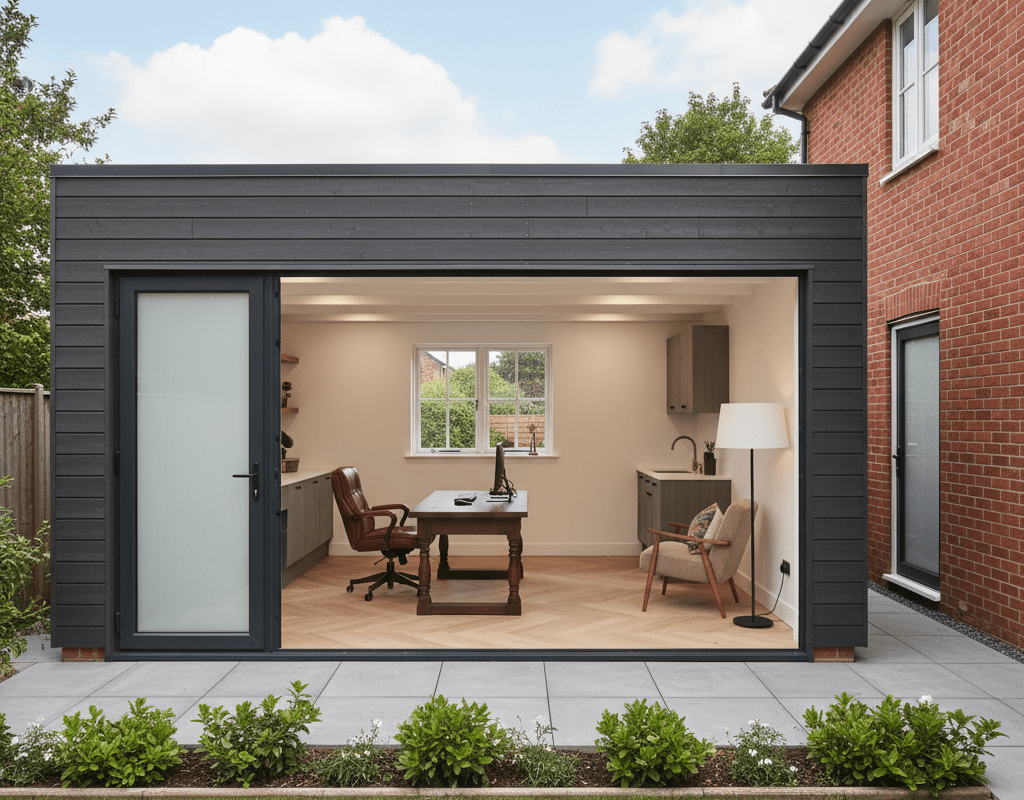
The Garden Office: If internal space is tight, a high-spec, insulated “garden pod” is a classic British solution. Ensure it has a direct ethernet connection and proper heating for year-round use.
4. The Modern Kitchen: The “Social Hub”
Modern living has moved away from the formal dining room. The contemporary standard is the Large Kitchen-Diner.
-
The Kitchen Island: This serves as a breakfast bar, a food prep station, and a casual social spot.
-
Utility Rooms: To keep the “social hub” quiet, modern renovations often move noisy appliances (washing machines and tumble dryers) into a separate utility room or a “laundry cupboard.”
-
Instant Boiling Taps: Say goodbye to the kettle. High-end UK renovations now almost universally include boiling water taps (like Quooker) to declutter worktops.
5. Wellness and “Spa-Style” Bathrooms
Modern living standards place a high value on self-care. The bathroom has evolved from a functional room into a private spa.
-
Wet Rooms: Creating a barrier-free, fully tanked wet room offers a sleek, modern aesthetic and improved accessibility.
-
Digital Showers: These allow you to set your precise water temperature and flow rate via a digital panel or smartphone.
-
Underfloor Heating: No modern bathroom is complete without the luxury of warm tiles underfoot—a feature that also helps dry out moisture quickly, preventing mould.
| Upgrade Category | Key Benefit | Typical ROI |
| Solar Panels | Lowered bills & sustainability. | High (Long-term) |
| Open-Plan Living | Improved natural light & flow. | Very High |
| EV Charging Point | Future-proofing for electric cars. | Medium |
| Smart Security | Peace of mind & lower insurance. | Low (but high appeal) |
6. Future-Proofing for EV Charging
As the UK approaches the ban on the sale of new petrol and diesel cars, a home without an EV (Electric Vehicle) charging point will soon feel dated. Installing a dedicated charging port on your driveway or in your garage is a major “green” flag for future buyers and a necessity for modern car owners.
Final Thoughts
Upgrading for modern living is about more than just aesthetics; it’s about performance. A home that is warm, digitally connected, and flexible enough to handle work and play is a home that will hold its value for decades.