



1. The “Fixed Price” vs. “Estimate” Trap
One of the most common reasons budgets fail is a misunderstanding of the paperwork. In the UK, there is a legal and financial world of difference between an estimate and a quote.
-
The Estimate: This is a “best guess.” If a builder gives you an estimate, the final price can fluctuate significantly as the project progresses.
-
The Fixed-Price Quote: This is a binding agreement. To get one, you must provide a “Schedule of Works”—a detailed list of every single task required.
-
The Golden Rule: Never start work based on a verbal estimate. Ensure you have a written contract (such as a JCT Homeowner Contract) that specifies the exact price and what it includes.
2. Beware of “Scope Creep”
“While you’re at it, could you just…” is the most expensive phrase in the English language.
Scope creep happens when you add small tasks to the project once the builders are already on-site. Replacing a radiator might seem simple, but it could lead to repiping, which leads to floorboards being lifted, which leads to extra labour costs.
-
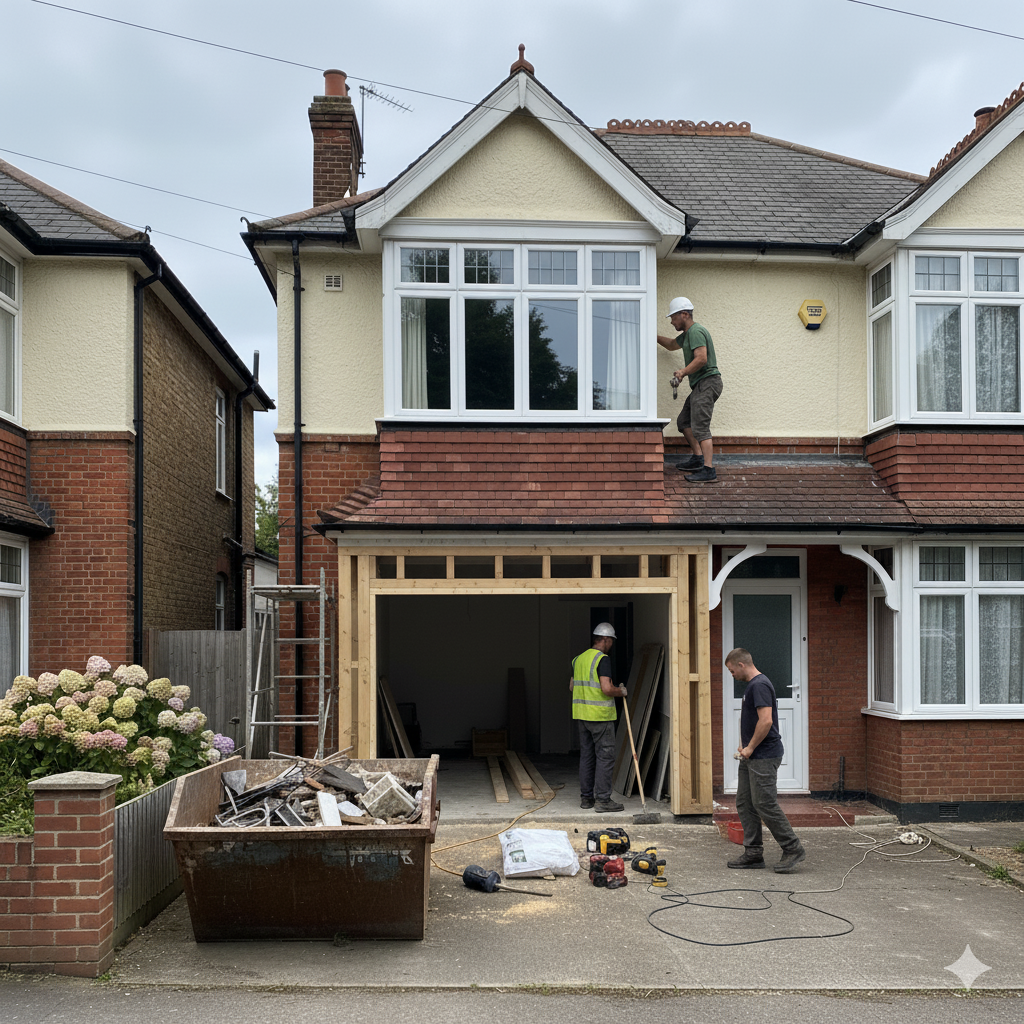
The Solution: Lockdown your design before the first skip arrives. Every change made mid-build will incur a “variation” charge, which is often billed at a higher premium.
3. The Non-Negotiable 15% Contingency
If you spend 100% of your available cash on the quote, your budget is already broken. In the UK, particularly with Victorian or Edwardian renovations, you will find surprises behind the plaster.
| Project Type | Recommended Contingency | Why? |
| New Build / Modern Home | 10% | Lower risk of structural surprises. |
| Period Property Renovation | 15% – 20% | Potential for damp, rot, or outdated wiring. |
| Kitchen/Bathroom Swap | 10% | Risk of plumbing leaks or uneven sub-floors. |
Top Tip: Treat this contingency fund as “invisible” money. It is not for upgrading your taps or buying a better oven; it is strictly for structural emergencies.
4. Account for the “VAT Headache”
In the UK, VAT is currently 20%. For a £50,000 renovation, that is an extra £10,000.
Many tradespeople and smaller construction firms will provide quotes “exclusive of VAT.” Always double-check this. If your budget is £60,000 and you accept a £55,000 quote that doesn’t include VAT, you are actually committing to £66,000—putting you £6,000 in the red before a single brick is laid.
5. Manage Your “PC Sums” Proactively
A “Prime Cost Sum” (PC Sum) is a placeholder in a builder’s quote for items they haven’t bought yet, such as tiles, bathroom suites, or kitchen units.
Builders often put a very conservative figure for these. If they allow £1,000 for your bathroom tiles, but you fall in love with premium porcelain tiles that cost £2,500, your budget has just overrun by £1,500.
-
The Strategy: Go shopping before the quote is finalised. Give the builder the exact specifications of the materials you want so they can provide an accurate price rather than a placeholder.
6. Living Costs and “Hidden” Expenses
A renovation budget often fails because it ignores the cost of living through the build.
-
The Takeaway Tax: If your kitchen is out of commission for four weeks, budget for the extra cost of eating out or ordering takeaways.
-
Site Waste: Don’t underestimate the cost of skip hire and waste disposal. In many UK cities, you may also need to pay for a “skip permit” from the council if it sits on a public road.
-
Storage: If you need to move furniture into a self-storage unit, include those monthly fees in your total project cost.







2 Responses
Simply wish to say your article is as amazing The clearness in your post is just nice and i could assume youre an expert on this subject Well with your permission let me to grab your feed to keep updated with forthcoming post Thanks a million and please carry on the gratifying work
I simply could not go away your web site prior to suggesting that I really enjoyed the standard info a person supply on your guests Is going to be back incessantly to investigate crosscheck new posts