
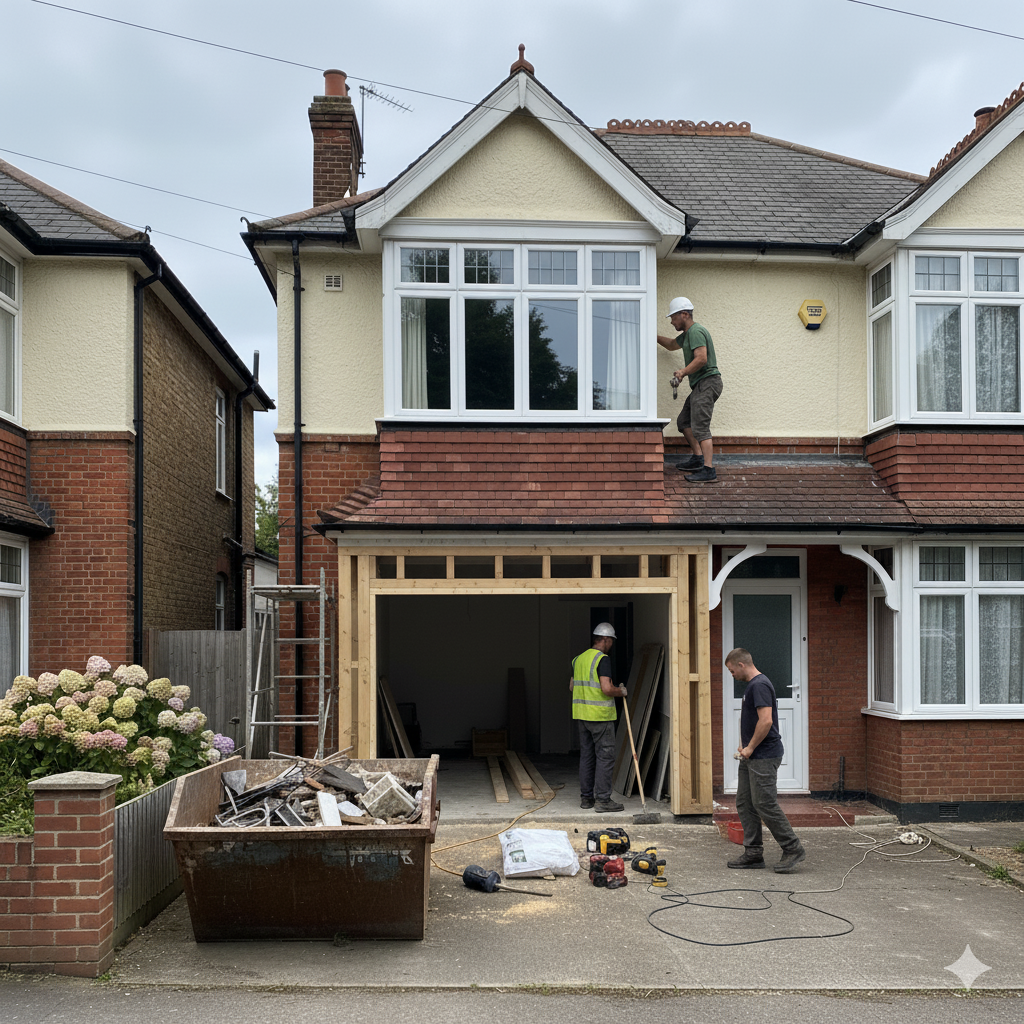




Embarking on a full home renovation is one of the biggest and most exciting projects you can undertake. Whether you’re transforming a tired period property or completely modernising a post-war build, proper planning is the only way to ensure a successful outcome that stays on budget and minimises stress.
A full renovation in the UK typically takes between 3 to 9 months for the construction phase alone, depending on the complexity (excluding the vital planning phase). Follow this detailed, step-by-step guide to navigate the process with confidence.
Phase 1: The Pre-Construction Blueprint (The Thinking Stage)
Before a single wall comes down, meticulous planning is required. This phase often takes 2 to 4 months before construction can start.
Step 1: Define Your Vision and Goals
Start with the “why.” What do you want your home to do for you?
-
Function vs. Style: Prioritise functional needs (more storage, better layout, energy efficiency) over purely aesthetic wants (a specific colour palette).
-
The Brief: Create a detailed brief covering your Needs (must-haves like a downstairs WC), Wants (nice-to-haves like a boiling water tap), and a clear Mood Board to guide your architect and designer.
-
Longevity: Is this your “forever home” or a property to sell in five years? This dictates how much you should invest in high-end finishes.
Step 2: Establish a Robust, Realistic Budget
Be rigorous with your finances. The biggest cause of renovation stress is an unexpected cost spiral.
-
The Three Buckets: Divide your budget:
-
Construction & Labour: The builder, electrician, plumber, etc. (often 50-60% of the total).
-
Materials & Fixtures: Kitchen units, bathroom suites, flooring, tiles, lighting.
-
Professional Fees & Statutory Costs: Architect, Structural Engineer, Surveyor, Planning Application fees, Building Control fees, and VAT (20%).
-
-
The Contingency Fund: Non-negotiable. Allocate a 10% to 15% buffer for unforeseen problems common in older UK homes (e.g., damp, rotten joists, discovering asbestos, or unexpected drainage issues).
Step 3: Appoint Your Professional Team
Your team is your project’s backbone. Always check references, insurance (Public Liability), and portfolios.
-
Architect/Designer: To create floorplans, structural drawings, and handle Planning Permission applications.
-
Structural Engineer: Essential if you are removing any load-bearing walls or undertaking major structural alterations (e.g., installing RSJ steel beams).
-
Main Contractor/Builder: The company that manages the site, coordinates trades, and executes the build. Look for Federation of Master Builders (FMB) or TrustMark accreditation.
Phase 2: Legal & Design Compliance (Getting Approval)
Step 4: Secure Necessary Permissions
There are two main regulatory hurdles in the UK:
-
Planning Permission: Required for significant exterior changes like extensions, loft conversions, or alterations to listed buildings. The council typically takes 8 weeks to process standard applications.
-
Building Regulations: Mandatory for almost all structural or service-related work (rewiring, new plumbing, insulation). This ensures the work is safe, structurally sound, and energy efficient (Part L). You must appoint a Building Control Inspector (Local Authority or Approved Inspector) to check the work at key stages.
-
Party Wall Act: If your work affects a shared boundary wall (digging foundations near it, cutting into it), you must serve a formal Party Wall Notice to your neighbours. This process can add 2–3 months if a dispute arises.
Step 5: Finalise All Material and Finish Specifications
Before the builder breaks ground, they need a clear plan for what is going back in.
-
Order Long Lead Items: Immediately order anything with a long delivery time, such as custom windows, bi-fold doors, bespoke cabinetry, and some high-end tiles or sanitaryware. Waiting for these items is the primary cause of site delays.
-
Create a Schedule of Finishes: Document every detail: paint colours (with brand/finish), specific socket locations, type of flooring, and appliance models. This prevents mid-build design changes, which are costly and time-consuming.
Phase 3: Construction & Installation (The Messy Stage)
The construction phase follows a very specific sequence to ensure integrity and efficiency.
| Order of Works (Typical Full Renovation) | Focus |
| 1. Demolition & Strip Out | Remove old kitchens, bathrooms, plaster, flooring. Dispose of waste responsibly (skips/waste clearance). |
| 2. Structural Work | Breaking through walls, installing steel beams (RSJs), laying new foundations, roofing, and making the building watertight. |
| 3. First Fix | Installation of everything that goes behind the plaster: new wiring/cabling (electrics), water/waste pipes (plumbing), insulation, central heating pipework, and ventilation systems. |
| 4. Plastering & Floors | Skimming walls and ceilings. Laying the sub-floor (screed) if required. The property is now starting to look like a home again. |
| 5. Second Fix | Installing the final functional elements: fitting sockets/switches, connecting radiators/boiler, hanging internal doors, and installing bathroom sanitaryware. |
| 6. Kitchen & Tiling | Fitting kitchen units, templating/fitting worktops, and wall/floor tiling. |
| 7. Decoration & Snagging | Painting, decorating, fitting final floor finishes (carpets/wood), and final lighting fixtures. The snagging list (minor defects) is drawn up with the contractor. |
Phase 4: Project Management & Handover
Step 6: Managing Disruption and Communication
-
Relocation: For a full renovation, moving out is highly recommended to protect your sanity and speed up the project.
-
Site Management: Agree on a communication schedule (e.g., a formal site meeting every Friday) with your contractor to track progress against the timeline and budget.
-
Be Flexible: Be prepared for unexpected issues. How you and your contractor handle these moments determines the stress level of the entire project.
Step 7: Final Sign-Off and Certification
Only make the final payment once you are fully satisfied and have received all legal paperwork.
-
Snagging Complete: Ensure all items on the snagging list are fixed to a professional standard.
-
Certificates: Collect all legally required documentation:
-
Building Control Completion Certificate.
-
NICEIC/ELECSA Electrical Safety Certificate (Part P).
-
Gas Safe Certificate (for the boiler/gas work).
-
Warranties for appliances and systems.
-
A full home renovation is a marathon, not a sprint. With detailed preparation, a strong team, and a clear budget, you can look forward to enjoying your beautifully transformed home.